
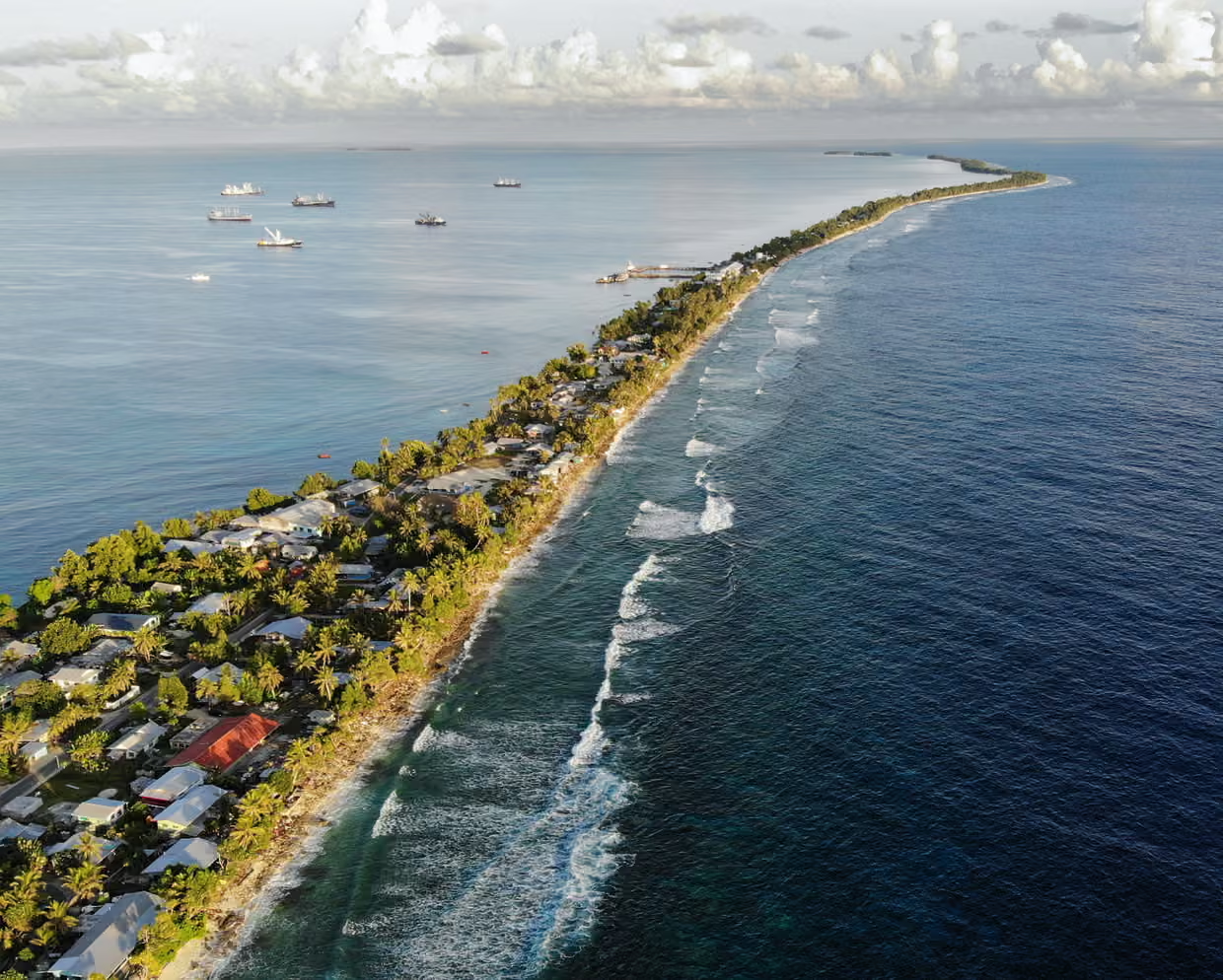
Tuvalu, tiny Pacific nation at the forefront of climate crisis, to host world leaders before Cop31 summit
Conference president expresses ‘complete faith’ in Chris Bowen to lead tough negotiations
Tuvalu, the Pacific nation at the forefront of the global climate crisis, will host a special meeting of world leaders before this year’s Cop31 summit, as the conference president expresses “complete faith” in Chris Bowen to lead tough negotiations.
Turkey’s climate minister, Murat Kurum, is president-designate for the November summit, set to see world leaders meet in Antalya to thrash out new targets for cutting carbon emissions.
After a drawn-out fight with Australia over hosting rights, Kurum used his first letter to global partners overnight to announce plans for the pre-summit meeting to take place in Fiji in October.
He and Bowen, Australia’s energy and emissions minister, will also convene a special leaders’ event in Tuvalu as part of the preparations.
The main leaders’ summit will take place in Antalya, Turkey, on 11-12 November, part of a joint model agreed between the Albanese government and the administration of Turkey’s president, Recep Tayyip Erdoğan.
Kurum said Bowen and the administration of Turkey’s president had shared purpose and would work with sincere cooperation.
“I have complete faith in his work,” Kurum said of Bowen, who will have “exclusive authority” over negotiations.
“To advance the fight against climate change, help boost climate resilience and accelerate the clean energy transition, already under way and irreversible, yet needing to progress more rapidly, we will bring together our diplomatic, geopolitical and economic strengths.”
Before the Cop31 summit, Bowen met with Germany’s state secretary for environment and climate action, Jochen Flasbarth, in Canberra to discuss preparations and the global energy shock emanating from the Middle East.
Flasbarth told Guardian Australia the war in Iran and moves by European countries to lift defence spending must not distract from global efforts to reduce carbon emissions.
He said the world should seek faster electrification of heavy freight transport, manufacturing and household technologies.
“This is all horrible but, on top of this disaster in the Middle East, it takes away the attention that is so desperately needed for global challenges, which will not disappear just because there is war,” Flasbarth said.
“This situation might create a new momentum for the Cop in Antalya, that countries are more open, including also those who were a little bit reluctant that we need to do the next steps to transition away from fossil fuels.”
Renewables make up about 60% of Germany’s energy supply, with coal accounting for about 22% in 2024. The country’s last coal-fired plants are due to be phased out by 2038, though some have been brought back online in recent weeks due to the crisis from the closure of the strait of Hormuz.
Flasbarth said, like in Australia, faster efforts to promote electrification were essential, including in passenger and freight vehicle technology.
“Electrification is the key track we all need to use,” he said.
“We started too late. We should have started this transformation much earlier and now our companies are surprised that China is faster. But nobody forced our industry to be so reluctant to invest in electric vehicles and I’m sure we will catch up … because it’s one of the backbones of our national industries.”
Darling Downs cattle and cropping farmer Sally Higgins has been named as the summit’s youth climate champion. The talks will feature core principles of “dialogue, consensus and action”.
Source: The Guardian