
New electric car chargers for South Africa’s richest city
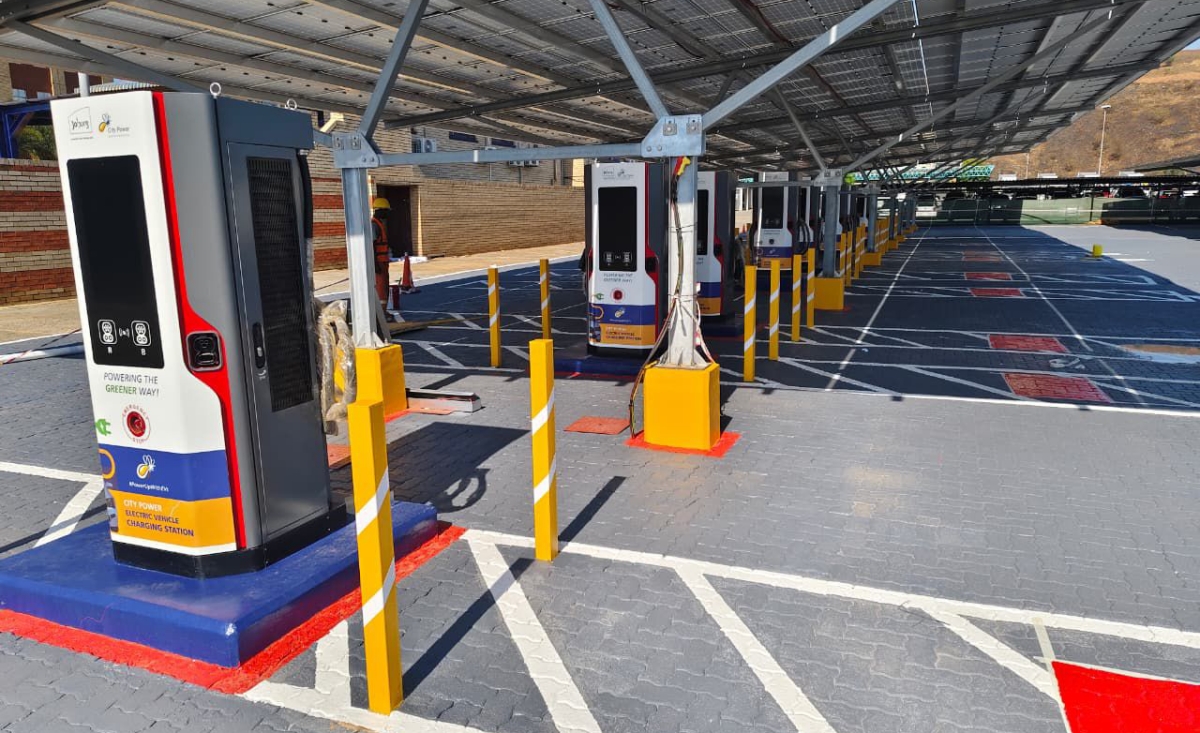
The City of Johannesburg and its power utility, City Power, have unveiled the first electric vehicle (EV) charging station that forms part of the city’s 10-point Energy Plan.
Located within City Power’s charging complex in Booysens, the station includes several EV chargers, powered by off-grid solar panels, although technical details regarding charging and storage capacities were not revealed during the launch.
These chargers mark the completion of the first phase of the plan, which aims to enhance service delivery and build a cleaner, more resilient energy system.
The city noted that its EV programme will gradually transition its fleet from internal combustion engines to electric vehicles, supported by the growing network of charging infrastructure throughout Johannesburg.
“The electric vehicle programme launched today is part of Johannesburg’s broader strategy to modernise municipal operations while strengthening service delivery,” noted Executive Mayor Dada Morero.
“By introducing electric vehicles and building charging infrastructure, the City is improving operational efficiency while reducing long-term costs and environmental impacts.”
The City of Joburg revealed that in the future, its EV programme will include the rollout of a city-wide charging network across its City Power Service Delivery Centres, operational depots, major transport routes, and public facilities.
“The network will also expand into communities and townships, encouraging broader adoption of electric vehicles among residents and businesses,” it noted.
“In line with global best practice, the City is also exploring innovations such as battery-swapping technology to improve operational efficiency and reduce downtime in high-demand settings.”
The city’s transition to electric vehicles is expected to significantly lower fuel costs, while also boosting operational efficiency across municipal services.
Saving millions on fuel spend
During the first phase launch of City Power’s charging complex, Morero mentioned that the financial case for the EV programme is compelling.
“Through the transition to electric vehicles, City Power is positioned to realise substantial cost savings up to R29.7 million per annum under a leasing model, and as much as R49.3 million annually if the vehicles are acquired outright and amortised over a five-year period,” he said.
The city confirmed that, coinciding with the launch, it will address infrastructure challenges, illegal connections, and criminal activities, especially as it faces electricity losses of approximately 29%.
The mayor added that, beyond financial savings, the environmental benefits involved with a full EV transition are profound.
“Once our fleet fully transitions, we will avoid more than 52,000 tons of carbon emissions each year,” he said.
“That is not just a statistic. It represents improved air quality for our communities, a significant reduction in harmful emissions, and meaningful progress towards fulfilling Johannesburg’s ambitious climate obligations.”
Expanding on the city’s plans, Morero noted that the transformation is already underway.
“Solar microgrids in informal settlements, solar street lighting in communities, rooftop solar on public facilities, revived gas turbines for emergency backup, and growing investments in battery storage, all these initiatives move us closer to an energy-secure, future-ready Johannesburg,” he said.
“The EV Programme strengthens this work. It supports our Smart City ambitions and accelerates our economic strategy by building pathways for new industries, new skills, and new jobs.”
Morero concluded, saying Johannesburg is not a follower but a continental leader in the green mobility sector.
Source: TopAuto South Africa